
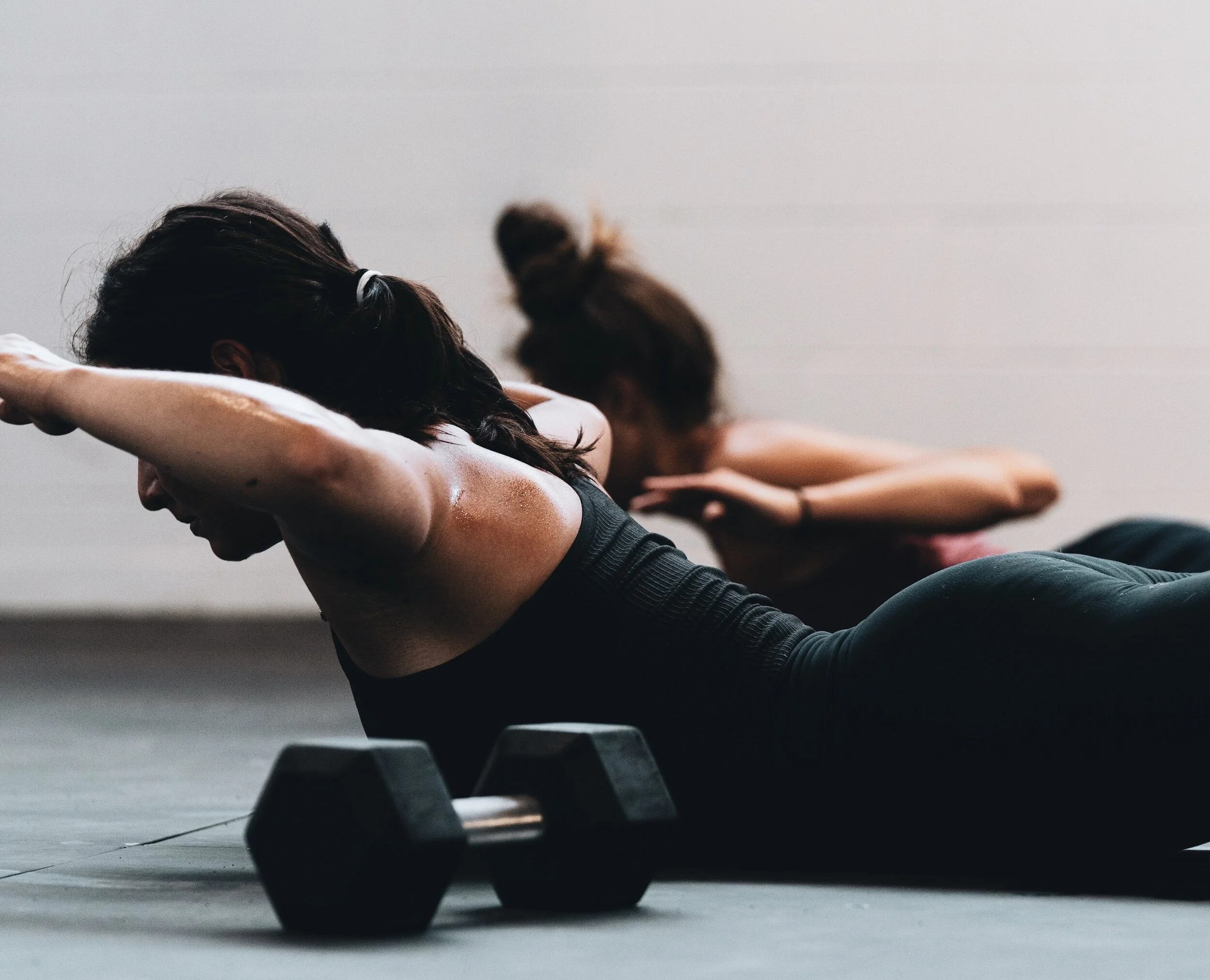
Pilates is the exercise that everyone seems to be doing these days. We have been told it’s great for strength, flexibility and posture, but is it enough, especially for perimenopausal and menopausal women?
While activities such as Pilates and walking certainly have value (especially for mobility, recovery, mood, and low-intensity movement), they are not sufficient on their own for women aged 40+ (and especially for those entering perimenopause/menopause) in terms of strength, hormonal health, metabolic resilience, bone integrity, and vascular function.
Why aren’t Pilates and walking enough?
Insufficient mechanical load and stimulus
Pilates and walking typically do not provide enough resistance or high-intensity/impact stimulus to drive the neuromuscular adaptations, muscle fibre recruitment (especially Type II fibres), bone loading and connective tissue strength that ageing women need.
Pilates tends to be isometric, which is great for postural muscles but not enough to develop lean muscle. We need heavy resistance exercises for this to occur.Hormonal changes demand different training.
As women move through midlife, there are declines in oestrogen and other hormonal shifts that affect how muscles, bones and metabolism respond to stimulus. Moderate-intensity exercise such as Pilates, walking, yoga, jogging and cycling do not address women’s altered physiology during this stage. Moderate-intensity exercise does not prevent muscle loss (sarcopenia), which begins to deteriorate at a rapid rate, decline in power or changes in vascular compliance (i.e., stiffening blood vessels).Metabolic & cardiovascular adaptation limitations
Walking is classified as low intensity, and while beneficial for general health, it does not trigger the higher-intensity adaptations (e.g., strong stimulus to insulin sensitivity, metabolic flexibility, and power output) that are important for women 40+. Staying in the “moderate” intensity zone too much can keep cortisol elevated and may not drive the body towards improved lean mass or improved vascular/neuromuscular functioning.Bone, connective tissue and vascular health require more than low-level movement.
As bones lose density, connective tissues lose tensile strength, and vascular function declines with age, we need to introduce more impactful loading (e.g., compound resistance training, jump or sprint work) to help maintain bone strength, muscular power, rupture risk and circulatory health.
What type of exercise should we be including?
Prioritise resistance (strength) training with compound movements (squats, deadlifts, presses, rows) rather than just light weights or machines.
Include higher intensity stimuli (for example, sprint intervals and short bursts of high effort) rather than exclusively long, moderate sessions.
Maintain walking, mobility work, and Pilates/yoga as complementary (excellent for recovery or mobility) but not as the sole “main workout” if the goals include preserving lean mass, bone density, metabolic health & longevity.
Adjust recovery, nutrition (especially higher protein intake and leucine-rich sources) and training programming to reflect the changed physiology of midlife women.
Walking and Pilates are good and definitely beneficial for many aspects of health, but they are not enough by themselves for women over 40 who wish to maintain muscle, bone health, metabolic function, vascular health and strength.